
THE BRIDGE TO COLLEGE
THE EMOTIONS OF COLLEGE ADMISSIONS

This month’s story comes from Aleeza Sugoto, our student who already has good options, is still waiting for her first-choice school to make its decision and has others also considering her. No doubt, admissions season is an emotional roller coaster.
“The first time I submitted an application was stressful. ‘Oh My God! I’m actually applying to a university!’ You’re going to be overthinking things a lot. I even reviewed the PDF of my application after I submitted it! Although with each application it slowly gets better, it’s still nerve-wracking.
“Waiting for university decisions can feel like living inside a slow-moving clock. Every day is filled with anticipation, doubt, and hope. One minute you’re confident, and the next you’re questioning every word of your Personal Statement. You’ll feel restless, and at times you’ll want to know the results now! Even though I am well aware that they haven’t announced anything yet, I keep looking at my phone to figure out when each school’s decisions are coming out.
“To keep yourself sane, trust in the effort and the work you put in. Trust in the hours you spent writing your story, deciding how to frame yourself, and choosing what to highlight. Re-read your essays, embrace your last months with your friends, and (try to) enjoy the moment.
“There’s no doubt that parents are also engulfed by the madness. While you have to deal with your emotions, you also have to deal with theirs. I get along pretty well with my family, but it’s stressful when they keep asking me what’s going on. ‘Have you gotten anything back? When are you going to get something back?!’ The best way to minimize your parents’ stress is to give them reassurance. Inform them what’s going on and remind them that you will definitely let them know as soon as you do.
“At school, I’ve seen a mix of affectations. Some people are overly confident, while others downplay the stress by claiming ‘we’ll just see what happens.’ When Early decisions started coming out, there were a lot of deferrals and rejections, but barely any acceptances, especially for the Top 20 schools. Everyone congratulates the few who got accepted, but you’ll find yourself empathizing with the people who didn’t get in and wondering why that happened. There was one person with an insane list of activities … the number of things he does outside of school is crazy … but he didn’t get in.
“So, based upon what I have seen, I don’t think applying Early really gives you any extra boost. You should only apply Early Decision if you for sure want that school because, if they take you, then you don’t have a choice. I have talked to some people who were accepted ED1 but are not entirely happy because there’s this monstrous ‘what if’ for the university options that suddenly disappeared. No doubt, being bound by an Early ‘win’ can cause disappointment.
“So, here’s some advice. First, be smart about your list of universities. There’s a lot of factors to take into account. Although it’s very popular to reach for the name brand, don’t apply just because of that. Ask yourself: does the school actually fit me? And be sure not to try for too many reaches.
“Second, consider applying first to a non-binding school even though it may not be your dream. One acceptance is enough to change everything. A single ‘yes’ lifts the weight of stress and uncertainty. My friends who do not have a school yet? Their minds are all over the place! Having one secured in your pocket is such a relief, and the confidence of an acceptance makes it easier to do your best work for your favorite schools.
“Third, start writing your essays early. Don’t do them too close to the deadline. You’re going to have a lot of different schools to write supplemental essays for, and if your mind is jumping around all over the place, you won’t execute very well.
“Personally, I really enjoyed researching the schools and writing their specific essays. Although I couldn’t at first, I can now clearly see the differences in the schools by carefully reviewing the websites. It’s really interesting! And as part of the process, I got to know myself better, which gives me a level of knowledge for my own self-growth. Knowing the person I want to be, I can now maneuver myself in the right directions.”Robert LeVine is the founder and CEO of University Consultants of America, an independent educational consultancy assisting students around the world with applications to colleges, universities and graduate schools. For more information, call University Consultants of America, Inc. at 1-800-465-5890 or visit www.universitycoa.com
FAMILY MATTERS
Communities and Milestones
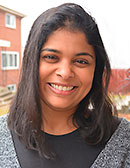
By Anu Verma Panchal
A few months ago, I had the good fortune to stand by my parents’ side as they celebrated a significant milestone, their golden anniversary. One of my favorite parts of the event was that in addition to uncles, aunts and cousins, we had with us their closest friends, the extended “framily” that had helped my parents recreate a sense of home and family when they were thousands of miles away from the place of their birth.
Circa 1980, with a toddler and 6-year-old in tow, my parents moved to a little town in Zambia called Kabwe. They knew no one and nothing about this new country beyond my dad’s offer letter and one phone call with a relative who had once lived in Africa.
But on their very first evening, there was a knock at the door. It was a young Malayalee couple with two little boys our age. Hearing that a new family from Kerala had arrived, they had stopped by to welcome us. From that one introduction, my parents were immediately absorbed into a group of friends.
The same thing happened every time we moved towns. The news of our impending arrival reached before we did, and we were pulled into existing Malayalee social circles. Our weekends were spent at each other’s houses, uncles in safari suits swilling whiskey, aunties in sarees holding deafening conversations while we ran around and played. As the years passed, my parents grew into the veterans who welcomed new families and organized the elaborate cultural events that gave the community a sense of home away from home.
And all around town – and across the South Asian diaspora – others were doing the same thing. In Tamil, in Bangla, in Hindi, they created communities that served a familial function for each other. Community building seems to be in our genes. Or, as a friend once told me, “We’re like goats ... we can only travel in packs.”
During the college years and in my early 20s, plugging into the local desi community was nowhere close to being a priority; in fact, I reveled in the freedom from it. It was irritating, even, to see the insularity that I imagined permeated those associations. Why move to another country and only hang out with the same people? Why not at least try to assimilate?
It was only when I became a parent that I found myself searching, maybe even yearning, for some small level of connection. I wanted my daughters to learn Bharatanatyam like I had, wanted them to celebrate Hindu holidays and go to the temple occasionally. Does that mean that I want my communities to be restricted by ethnicity, language or religion? Certainly not. I am blessed with close “framily” from many backgrounds, and I enjoy Gasparilla as much as I do Onam and Navaratri.
Yet I am grateful for the generations who came before we did and established everything from the Tampa India Festival to the India Cultural Center so that we now have the option to dip a toe, an ankle or our whole selves in cultural life if we so desired.
A week before my older daughter was due to leave for college, I took her on one of our habitual visits to the Hindu temple here in Tampa. By a happy coincidence, the pujari on duty that day was the same one who had presided on the day that we had taken her on her first temple visit when she was a 6-month-old baby. “You’re the one who carried her to the front of the room when she was born, and now she’s starting college,” I told him. He beamed. “Look at that!” he marveled.
Look at that indeed. That kind of continuity doesn’t just happen. It’s the result of hard work from a lot of people who came before us, many of whom we’ll never even know. The roots they put down gave us the luxury to pick and choose how much we want to hold on to, because some variation of it has been preserved here for us.