
PANCREATIC CANCER
Pancreatic cancer is a dreaded type of cancer due to its poor prognosis. Worldwide, about 500,000 new cases of pancreatic cancers are diagnosed per year. Recent developments in management of pancreatic cancer bring some hope for the unfortunate victims.
Pancreas is a soft, flat, yellowish organ that lies across the backside of the abdomen, behind the intestines, across the spine reaching from the right to left sides. It has a head on the right side, a neck, a body that stretches across the spine and a tail at the left end. It makes an exocrine secretion, which is the pancreatic juice that drains into the initial part of intestine and assists digesting food. It also creates endocrine secretions that go directly into the blood stream. Most well-known endocrine secretion is insulin produced by the islet cells, which helps to digest carbohydrates. Other endocrine secretions are glucagon, somatostatin and pancreatic polypeptide.
Adenocarcinoma makes up 95 percent of pancreatic cancers. About five percent of them can be neuroendocrine tumors and cystic neoplasms or IPMNs. Tumors of head of pancreas cause jaundice early on, whereas tumors in other areas of pancreas can grow silently for a long time and become advanced by the time of the diagnosis.
Initial symptoms can be vague abdominal discomfort, mid abdominal pain or back pain, indigestion, weight loss, jaundice, dark urine or nausea. When the tumor is located on the head of pancreas, it can compress the bile duct that goes through the head of pancreas before emptying into the first part of intestines. Such firmness of bile duct results in jaundice, liver dysfunction and dilatation of the bile duct and gallbladder. It is the bile that gives the brownish yellow color for the stool. The stool becomes clay colored when bile cannot enter the intestines. One may also develop migratory thrombophlebitis of veins.
Risk factors for pancreatic cancer are smoking, obesity, chronic pancreatitis, alcoholism, genetic links, diabetes mellitus and increasing age. For the most part, we do not know the reason for this cancer. There appears to be an higher incidence of pancreatic cancer for the past several years. About 1 in 56 men and 1 in 60 women stand a chance to get pancreatic cancer.
Tests to confirm diagnosis of pancreatic cancer include CT scan of abdomen, MRI scan of the biliary tree (MRCP), upper GI endoscopy with ERCP, and blood tests to study pancreatic and liver functions. Confirmation is done with a fine needle biopsy either using endoscopic ultrasound or CT guided approach. At times, laparoscopic or open biopsy is required for diagnosis as well as staging.
Treatment depends upon the stage of the tumor, type of tumor, location and physical condition of the patient. For most part, surgery is the best option, especially if it can be performed for cure. The entire tumor must be removed with a clear margin when possible. Staging of the disease is done to know if it has spread to regional lymph nodes or to distant organs such as liver or lungs. Since surgical resection is a major procedure, it is generally performed only if there is hope for cure. Neuroendocrine tumors and IPMNs are less aggressive cancers and can be resected even if they are big or advanced. Adenocarcinomas have a worse outlook. When cure is not possible, surgery can still be attempted for palliation, to make the person more comfortable with easing of the symptoms.
Chemotherapy and radiation therapy are held as adjuncts in treatment, knowing well that they are not effective in curing the disease. Five-year survival of pancreatic cancer is only 10-15 percent in U.S. A curative surgical resection can increase that to 25 percent. Early detection is made possible with artificial intelligence in reading CT scans. Overall survival rate of pancreatic cancer has doubled in the past 20 years.
A new development targets KRAS gene mutations, which are noted to be present in 90 percent of pancreatic cancers. A medication by name daraxonrasib was introduced by Revolution Medicine recently. It targets RAS, a protein found in pancreatic cancers. This has doubled the survival period compared to usual chemotherapy. Another development is discovery of a personalized MRNA vaccine that may help to control the pancreatic cancer, like metastatic melanoma. Improved chemotherapy combinations and proton radiation therapy are also found promising. Recently, FDA approved use of Optune Pax, a portable device worn on the abdominal wall in Tumor Treating Field (TTF). It sends out electrical impulses that break up mitotic cells, making it easier for chemotherapy to work. CART therapy and immunotherapy are other options, using gene modifications and immune modifications.
Very often, pancreatic cancer is diagnosed late since it grows silently. When it is in advanced stage, sometimes it is better to accept reality than attempt heroic measures. There is something to be said about hospice care and comfort measures when facing terminal cancer.
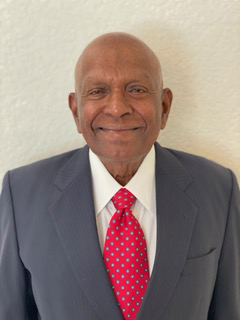
Dr. Venkit S. Iyer, MD, FACS, is a retired General and Vascular Surgeon. He has authored four books – “Decision making in clinical surgery,” “Aging well and reaching beyond,” “The Clinic” and “Geriatrics Handbook.” They are available through Amazon or from the author. His website venkitiyer.com has necessary links and contact information.
It's Okay to Be Nervous — A Dentist's Honest Letter to You
You are not alone. And the door to a healthier smile is far more welcoming than you might think.
Let me start with something you might not expect a dentist to say: I completely understand if coming to see me makes you nervous. In fact, I would be surprised if it didn't — at least a little.
Dental anxiety is one of the most common things I encounter as a newly qualified associate dentist here in the Tampa Bay area. Not cavities, not gum disease — anxiety. It walks through the door before the patient does, and I have learned to recognize it in a tight smile, a quietly rehearsed apology, or the way someone grips the armrests just a little too firmly.
So, before we talk about teeth — let's talk about that.
Why So Many People Feel This Way
Dental fear does not come from nowhere. For many people, it traces back to a childhood memory
— a procedure that hurt more than expected, a practitioner who did not explain what was happening, or simply the strange sounds and sensations of a dental chair experienced at a young age. Those impressions stay with us, and they are genuinely hard to shake.
Research suggests that up to one in three adults experience some level of dental anxiety, and roughly one in ten avoid the dentist altogether because of it. If you are in either of those groups, you are not being dramatic. You are not weak. You are being completely human.
"The bravest thing is not coming in without fear. It is coming in despite it — and letting someone help."
What Dental Anxiety Actually Looks Like
It does not always look like white-knuckle panic. Sometimes it is much quieter — and just as real. You might recognize yourself in some of these:
- Putting off booking an appointment for months, or even years
- Feeling a creeping dread in the days leading up to a visit
- Worrying about being judged for the current state of your teeth
- Catastrophizing about what the dentist might find
- Struggling to keep your mouth open, or feeling short of breath in the chair
- Cancelling at the last minute, even when you genuinely wanted to go
None of these make you a difficult patient. They make you someone who needs a different kind of care — and that is exactly what I am here to offer.
The First Thing I Always Ask
Before I pick up a single instrument, I ask every new patient: "Is there anything about today that's worrying you?" That question matters more to me than anything on your chart. Your comfort comes before everything else.
What Has Changed in Modern Dentistry
If your last dental experience was years ago — or if you are going by memories from childhood
— I want to gently reassure you: things have changed enormously.
Modern local anesthetics work faster and more effectively than ever before. Instruments are quieter — I use advanced laser technology in many procedures, which often means less discomfort and faster healing than traditional methods. Techniques are more precise, which means less time in the chair overall. But perhaps most importantly, the culture of dentistry has shifted. Good dental care today is a conversation, not something done to you.
You will always know what is happening and why. Nothing moves forward without your understanding and your agreement.
You Are Always in Control
We use a simple stop signal — usually raising your hand — to pause at any moment. No questions asked, no rushing. You set the pace, every single time.
The Gentle Truth About Waiting
I say this with kindness, not to alarm you: avoiding the dentist almost always makes things harder in the long run. A small cavity caught early is a brief, simple appointment. Left too long, it quietly grows into something more involved. Gum disease is entirely painless in its early stages — which is precisely why it progresses unnoticed when check-ups are skipped.
The reassuring news is that most of what I see in patients who have stayed away for a long time is completely manageable. We begin where you are, not where you think you should be. There is no lecture, no judgment — only a clear, calm plan to move forward together.
"I have never once thought less of a patient for the state of their teeth. I only ever think about how I can help.
A Note on Embarrassment
One of the biggest reasons people avoid the dentist is not pain — it is shame. A fear of being judged for teeth that have not been looked after, for time that has passed, for years of missed appointments piling up into something that feels insurmountable.
I want to be very clear: I do not judge. I have seen everything. I know that life gets in the way — that finances get tight, that fear itself is one of the most powerful reasons people stay away. My job is to care for your teeth, not to evaluate the choices that led you here.
When you sit in my chair, the only thing on my mind is: how do I help this person?
A fresh start is always possible. No matter how long it has been, or what you imagine I will find — there is no hole too deep, no gap too wide. We simply begin from where you are today.
Simple Steps to Make Your First Visit Easier
If the idea of coming in still feels overwhelming, here are a few approaches that genuinely help:
- Book a "meet the dentist" visit first — no treatment, just a relaxed conversation and a look around. Completely low pressure, no surprises.
- Bring someone with you — a friend or family member in the room can make the whole experience feel far less daunting.
- Tell us everything — the more you share about your anxiety, the better we can tailor the appointment to suit you.
- Use headphones — music or a podcast during treatment is always welcome. It helps more than you might expect.
Take it one step at a time — you do not need to commit to a full treatment plan on day one. A single visit to say hello is a perfectly valid start.
Why I Became a Dentist
I still remember the day dentistry became personal for me. I was a teenager, mid-orthodontic treatment, playing in a cricket championship, when a ball hit me square in the face. My braces tore through my upper lip. I was bleeding, in pain, and — being a teenager — far more worried about what my smile would look like afterward than about anything else.
The dentist who treated me sutured the wound from the inside, so carefully that today, decades later, there is no visible scar. That moment stayed with me. It's when I understood, firsthand, what it means to be in someone's care during a moment of pain and vulnerability — and to come out the other side whole, without even a mark to show for it.
That experience, paired with growing up watching my uncle — the one doctor in our family — bring genuine relief and dignity to his patients, set the course for my life. I studied dentistry in India, trained rigorously in clinical practice and patient management, and later made the decision to move to the United States to build on that foundation and train further in the standards of American dental care.
Along the way I've learned that a healthy mouth genuinely changes how a person moves through the world. When you are not in pain. When you are not self-conscious about your smile. When you can eat what you enjoy and speak without thinking twice — life feels lighter, and that shift is real. I've felt it myself, and I've watched it happen for patients again and again.
As a new associate dentist here at the Family and Cosmetic Dentistry with Dr. Neeraja Jasthi, I am at the beginning of what I hope is a long career built on genuine trust with genuine people. I do not want to be the dentist that patients dread. I want to be the one they wish they had found sooner.
If that sounds like the kind of care you have been looking for — I would love to meet you.
Ready to Take the First Step?
Even a quick hello counts. Book a no-pressure introductory visit and let's start a conversation about your smile — entirely at your own pace.
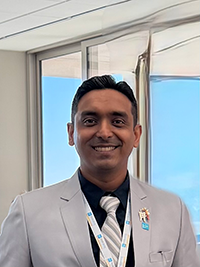
Dr. Jignesh Patel, associate dentist at Family Cosmetic Dentistry with Dr. Neeraja Jasthi in Tampa, can be reached at (813) 866-9913 or visit https://www.drjasthi.com/